
Apartment Balcony Railing Replacement in Oakland: What SB 721 Repairs Actually Involve
The report is in. Now the Oakland clock is running
If you own or manage a three-plus unit building in Oakland, the SB 721 inspection itself is usually the easy part. The harder part starts when the report lands on your desk with railings, guardrails or stair handrails flagged. Now you have city filings, deadlines, tenants who still use those balconies, and a repair scope someone other than the inspector has to build.
Below is what happens after the report in Oakland, then the railing side of the work. Alameda Custom Railing builds and installs guards for apartment buildings across the East Bay, and our multifamily railing services page covers how we take on building-scale work. If you have not had the inspection yet, start with our SB 721 balcony inspection guide for the East Bay.
What Oakland requires after the EEE inspection
Oakland calls this its exterior elevated element (EEE) program. SB 721 (Health and Safety Code 17973) covers three-plus unit buildings with wood-supported balconies, decks, stairs, walkways or landings more than 6 feet above grade, railings included. The first statewide deadline was January 1, 2026, which has now passed, and inspections repeat every six years.
In Oakland, the owner, property manager or HOA submits the EEE Inspection Form along with the inspector's written report through the City of Oakland Online Permit Center. Buildings that are exempt file an Exemption Declaration Form instead. After that, the timing looks roughly like this, based on the city's published program page:
| Step | Timing |
|---|---|
| Inspector delivers the written report to the owner | Within 45 days of the inspection |
| Immediate threat to safety found | Report goes to the owner and Oakland Code Enforcement within 15 days, and the owner must restrict access right away |
| Owner applies for a repair permit | Within 120 days of receiving the report |
| Repairs completed | Within 120 days of permit approval, unless Code Enforcement grants an extension |
| Repairs still not done | At 180 days the inspector notifies Code Enforcement, and after 30 more days civil penalties of $100 to $500 per day can apply |
Two rules catch people off guard. First, the repairs must be done by a licensed contractor who is not the inspector, so the firm that wrote your report cannot turn around and build the fix. Second, the reports have to be kept for two inspection cycles. Confirm current forms and dates with the city, or call the One-Stop Permit Center at (510) 238-3891. The permit side runs through the Bureau of Building at 250 Frank H. Ogawa Plaza, and our post on Oakland deck railing permits explains how that office thinks about guard work.
Planning a railing project in Alameda or the East Bay? Get a free, no-obligation on-site estimate and an honest written price.
What usually fails on older Oakland walk-ups
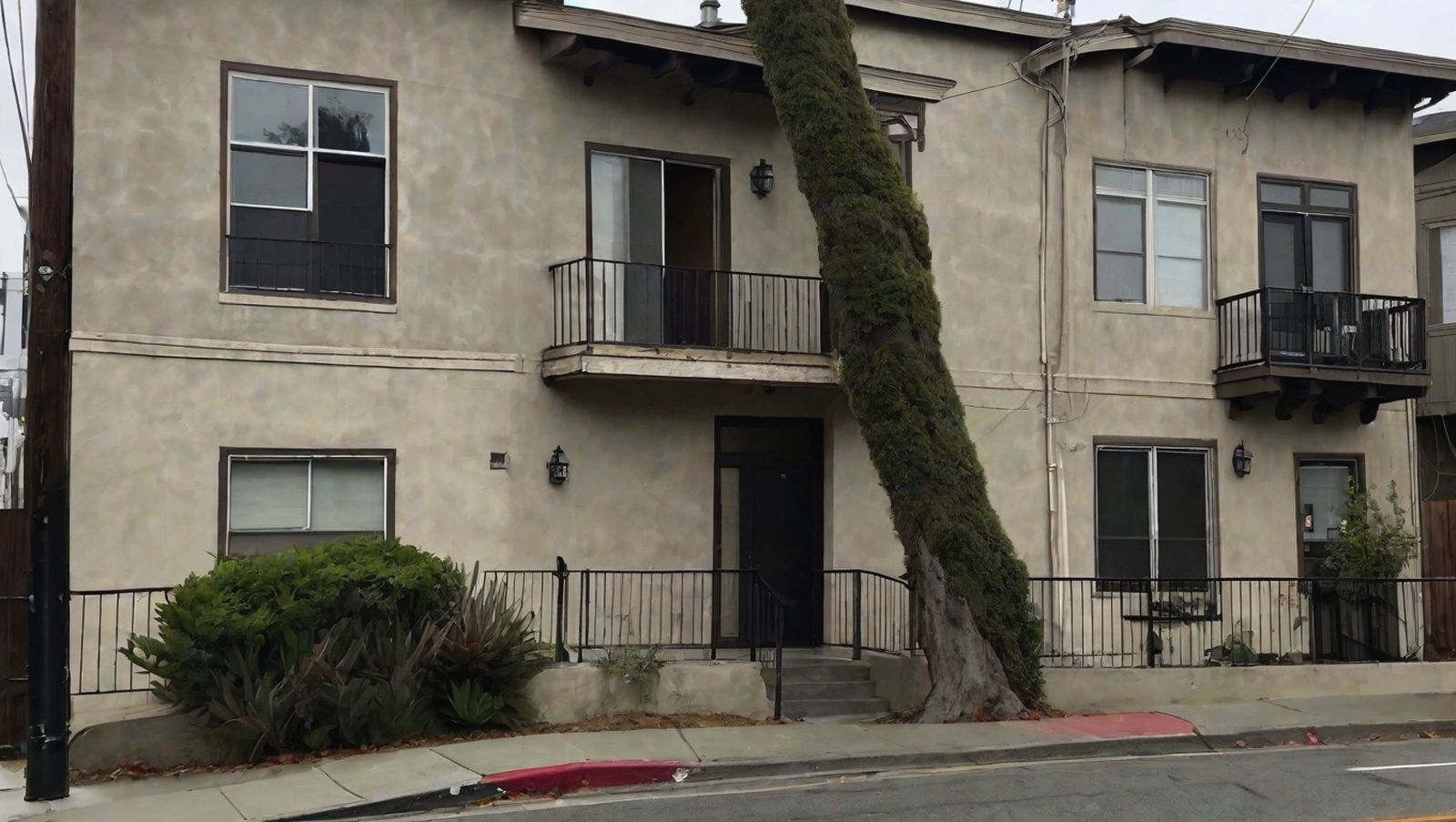
A lot of Oakland's rental stock is older wood-framed walk-ups: two and three story buildings with exterior stairs, a run of balconies or a shared walkway along the back. They fail in the same handful of ways.
Loose posts. This is the big one. A post that moves when you push on it is rarely a railing problem. It is usually a framing problem, where the rim joist or blocking the post bolts into has rotted from years of water getting in at the deck edge. Tightening the bolts does nothing when the wood behind them is soft.
Guards under 42 inches. Plenty of older balconies have rails at 36 inches or lower. Current California code calls for 42-inch guards, so if the railing is being replaced, expect it to come up to that height.
Picket spacing that fails the 4-inch sphere. Openings must stop a 4-inch sphere (6 inches at the stair tread triangle). Older rails with wide gaps or horizontal members do not pass. Our guide to California railing height and spacing rules has the full breakdown.
Corroded fasteners and brackets. Rusted lag screws, split brackets and steel that has been rusting inside a wood post for decades.
Repair or full replacement
Not every flagged railing needs to come out. A single loose section on an otherwise sound guard, with good framing behind it, can often be re-anchored or rebuilt as a targeted railing repair.
Full replacement starts making sense when the guard is under height, fails the sphere test along its whole length, or when the framing repair underneath means the railing has to come off anyway. If a crew is opening up the rim joist to replace rotted wood, the old railing is coming down regardless, and rebuilding it to current code at that point costs far less than doing it again later. When several units share the same railing design, it usually pays to replace them as one consistent scope rather than patching each one differently.
The report and any engineer's recommendations set the direction. We build to that scope and tell you plainly where repair is realistic.
Anchorage matters more than railing style
On an SB 721 job, the first question is not style. It is how the guard ties into the building. A good-looking railing bolted into soft wood is still a failed guard. On an apartment building the code expects the top rail to resist 50 pounds per linear foot or a 200-pound concentrated load, and that load has to travel through the posts, the connections and into solid framing.
For multifamily work, we usually build in powder-coated steel or powder-coated aluminum. Steel gets galvanizing or a zinc primer under the powder coat so it holds up outside. Aluminum is lighter, does not rust, and is a sensible choice for long runs of balconies. Either way, the connection details (through-bolting, proper blocking, stainless or galvanized hardware, flashing at penetrations) are what keep water out of the framing and keep the guard tight. Oakland sits on the Hayward Fault, which is one more reason solid connections into framing matter on an elevated walkway.
Working alongside the inspector, engineer and framing crew
On most repair scopes, the railing is one trade in a sequence. The inspector identifies the problem. An engineer may specify the repair if structure is involved. A framing contractor replaces rotted joists, rim boards or blocking. Then the railing goes back on, anchored into new wood, and the city inspects.
We coordinate with whoever runs the framing side, your GC or a crew you hired directly. That means confirming post locations and blocking before the deck surface goes back down, matching connection details to the engineer's drawings, and fabricating in the shop while the framing work happens so the railing is ready when the structure is. If you are a GC looking for a railing sub on one of these jobs, our post on working with a railing subcontractor in Oakland covers that side.
Phasing units and keeping tenants safe
Tenants still live there during the work, so the schedule has to account for them. If the report flagged an immediate safety threat, access to that balcony or stair has to be restricted right away, and that restriction should stay in place until the repair is signed off.
For the rest, we phase the work so units are not all shut down at once. A common approach is to group units by elevation or stair core, finish one group, get it inspected and reopened, then move to the next. Shared egress stairs need extra care, because tenants have to keep a safe way out at all times. You get a written schedule from us based on the scope, the permit and the framing timeline. This is not a one-week job like a single-family deck rail, and we will not pretend it is.
What drives cost, and documenting for the next cycle
Cost on an apartment railing job depends on the number of units and linear feet, repair versus replacement, the material and finish, how much framing work sits underneath, stair runs versus flat balcony guards, access (upper floors, tight back yards), and how the work has to be phased. Building-scale work gets a scoped estimate built from the inspection report and a site walk, not a number over the phone.
Keep everything: the report, the permit, shop drawings, photos before and after, and the final inspection sign-off. Oakland requires the reports to be kept for two cycles, and having a clean record makes the next six-year inspection much simpler. If you also manage condos, our SB 721 vs SB 326 comparison explains how the HOA rules differ.
We serve owners across Oakland and the wider East Bay. Send us your inspection report or call (510) 390-9618 and we will walk the building, scope the railing work and give you a written estimate. See how we handle building jobs on our apartment and multifamily railings page, or call (510) 390-9618 to get on the schedule.
Questions, Answered
Who can do SB 721 railing repairs in Oakland?
A licensed contractor who is not the inspector who wrote your report. Oakland's EEE program, following state law, keeps inspection and repair separate. If structure is involved, an engineer may specify the repair, and a framing contractor and a railing contractor often work in sequence. Call (510) 390-9618 to talk through your scope.
How long do I have to fix railings flagged in an Oakland EEE report?
Based on the city's program page, you apply for a permit within 120 days of receiving the report and complete repairs within 120 days of permit approval, unless Code Enforcement grants an extension. If repairs are not done at 180 days, the inspector notifies Code Enforcement, and penalties of $100 to $500 per day can start 30 days later. Immediate safety threats require restricting access right away. Confirm current dates with the city.
Do replacement balcony railings have to be 42 inches tall?
When a guard is replaced, expect it to meet current California code, which calls for a 42-inch guard height and openings that reject a 4-inch sphere. Many older Oakland balconies have shorter rails with wider gaps, which is a common reason they get flagged. Confirm requirements for your building with the Bureau of Building.
What is the best railing material for an apartment building?
For most multifamily work we recommend powder-coated steel with galvanizing or zinc primer underneath, or powder-coated aluminum, which is lighter and does not rust. The material matters less than how the posts anchor into solid framing, since that connection is what carries the load.
Can tenants stay in their units during railing replacement?
Usually, yes. We phase the work by unit group or stair core so only part of the building is affected at a time, and shared exit stairs stay safely usable. Any balcony or stair flagged as an immediate hazard should stay closed off until the repair is inspected and signed off. You get a written schedule based on your scope.

Keep reading
Need Help in Alameda?
Alameda Custom Railing designs, fabricates, and installs custom railings across Alameda and the East Bay, with free on-site estimates, honest written pricing, and most standard residential railings installed in about a week. Licensed and insured. Landed on this article from a search? Head back to our homepage to see everything we do, or reach out now.