
Cable Railings in Alameda, CA
View-preserving stainless steel cable railings, tensioned to code and built to resist Bay salt air.
Keep the view, keep the code
Cable railing is the go-to choice when you do not want your railing to be the thing you notice. Thin horizontal runs of stainless steel cable nearly disappear against a Bay view, a hillside, or a backyard, which is why they have become the signature look of modern East Bay decks and terraces. At Alameda Custom Railing we fabricate the posts and frames, run and tension the cable, and install the whole system so it is both beautiful and code-compliant. Done right, a cable railing stays taut, rust-free, and open for years. Call (510) 390-9618 for a free on-site estimate.
What it is and who it's for
Cable railings are a type of open-view guardrail system that uses tensioned stainless steel cable in place of balusters.
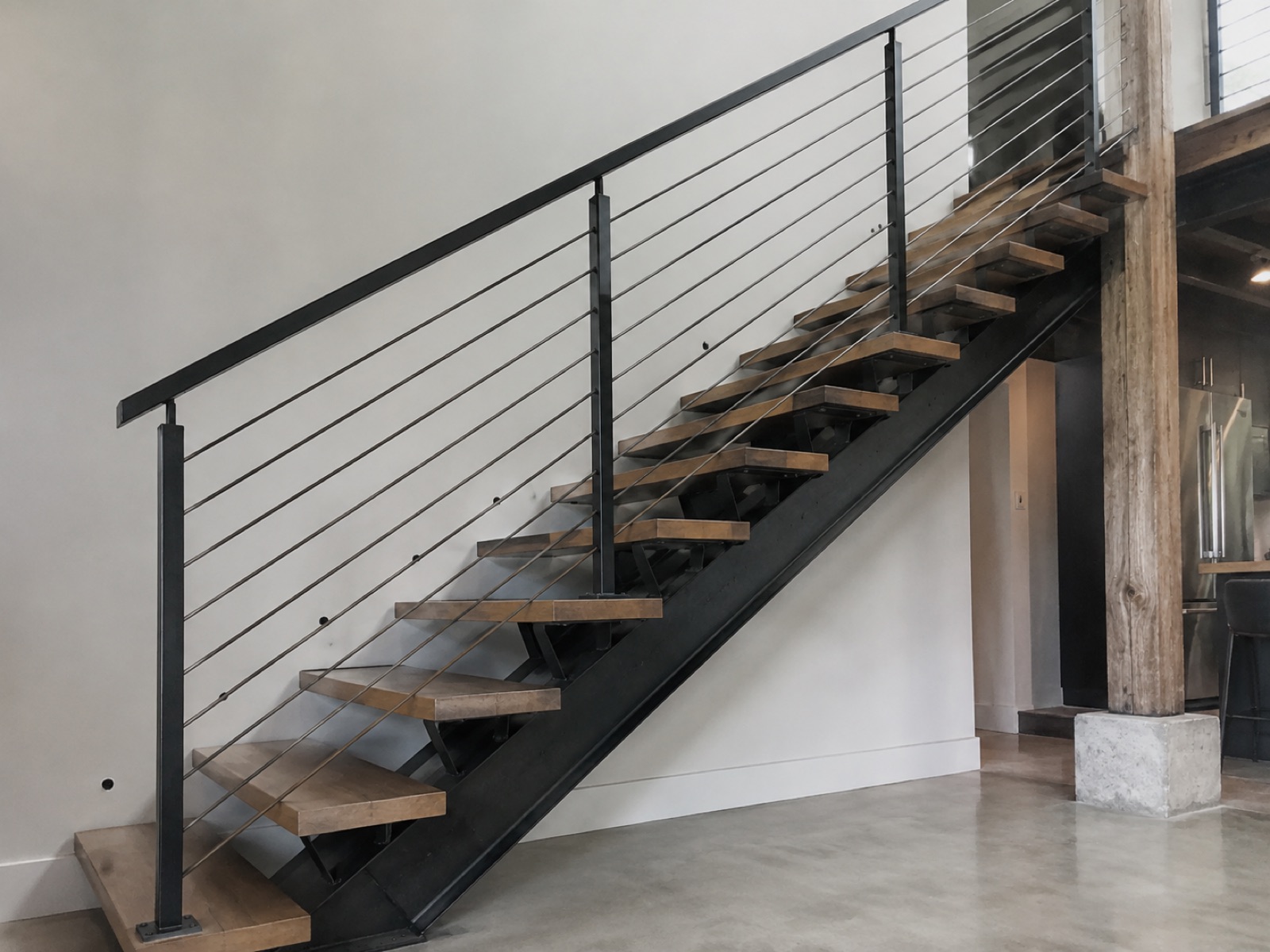
A cable railing uses a rigid frame, usually powder-coated aluminum, steel, or wood posts with a sturdy top rail, and fills the guard with tensioned horizontal cables instead of balusters or glass. It is for homeowners who want to preserve a view and get a clean, modern, low-profile look: elevated decks, rooftop terraces, exterior and interior stairs, and balconies. It is especially popular in the Oakland and Berkeley hills, where the whole reason for the deck is the panorama, and on Alameda waterfront homes where an unobstructed line to the water is the point.
Cable is a precision system. It lives or dies on proper post spacing, cable tension, and hardware quality, which is where an experienced fabricator earns their keep.
Specs and materials
We build with 316 marine-grade stainless steel aircraft cable, typically 1/8 inch to 3/16 inch in a 1x19 construction that resists stretch and stays glossy. The details that keep a cable rail safe and taut:
- Post spacing about 4 feet apart to limit cable deflection, so the cables do not bow when someone leans or pushes on them.
- Cable spacing near 3 inches vertically, which keeps the system compliant with the 4-inch sphere rule once real-world deflection is accounted for.
- Proper tensioning hardware, threaded terminals, and turnbuckles so each run can be dialed to spec and re-tensioned over time.
- 316 stainless, not 304, for shoreline projects, because 316 handles chloride-heavy salt air far better.
We use 316 stainless because 304 will eventually show tea-staining near the Bay. It costs more, and near the water it is worth it.
Code compliance
A guard is required where a walking surface is more than 30 inches above grade, and guards are generally built to 42 inches tall in the East Bay. The 4-inch sphere rule is the make-or-break detail for cable: the openings must not allow a 4-inch sphere to pass, which is why we set posts close and cables tight, since loose cable can deflect open. Where a handrail is required it sits 34 to 38 inches above the nosing and must be graspable. Guards resist 20 pounds per linear foot at the top and infill must handle the load without spreading. These requirements come from the California Building Code and California Residential Code; Oakland even publishes its own cable-railing handout on the 4-inch spacing challenge. Confirm current specifics with your local department.
How we build your railing
Consult & Measure
We assess your deck or stair, discuss the view, and measure at no cost.
CAD & Shop Drawings
We lay out post spacing and cable runs so deflection and spacing stay compliant.
Engineering & Code Review
We confirm heights, spacing, and framing anchorage against local code.
Shop Fabrication
We fabricate and finish the posts and top rail in our shop.
Install & Tension
We anchor the frame, run the 316 cable, and tension every line to spec.
Inspect
We verify spacing, tension, and load, then pass final inspection.
Built for the East Bay
Cable railing and the East Bay coast are a demanding match. On Alameda, a near-sea-level island city, the salt-laden air is unforgiving, which is why we specify 316 stainless cable and hardware rather than cheaper 304, and pair it with powder-coated posts. Get the metallurgy wrong and you will see rust streaks within a season. In the Oakland and Berkeley hills, homes sit on steep lots directly along the Hayward Fault, so we pay close attention to how posts are anchored into framing or blocking, because a cable system is only as safe as the structure it is bolted to. Seismic movement and cable tension both pull on those connections, and we size them accordingly.
Honest pricing
Cable railing typically runs $75 to $260 per linear foot installed. A common project, roughly 50 feet, averages around $9,000, with full projects landing between about $3,750 and $13,000 depending on length, post material, and stair work. Corners and turns add about 20 to 30 percent, stairs cost more than flat runs, permits run $50 to $500, and Bay Area labor plus 316 stainless push toward the high end. Cable is a premium system, and the hardware and tensioning labor are where the money goes. These are honest ranges; your real number comes from a free on-site estimate.
| Scope | Typical range |
|---|---|
| Installed per linear foot | $75–$260 |
| Typical full project | ~$3,750–$13,000 |
| Average ~50 ft run | ~$9,000 |
Available across the East Bay
We install cable railings throughout Alameda County, including Alameda, Oakland, Berkeley, San Leandro, Hayward, and Castro Valley. From view decks in the Berkeley Hills to waterfront balconies in Alameda, we tension every run to your local code.
Related services
Comparing modern options? See our glass railings for a frameless view without cables, our deck and balcony railings for the full range of guard options, or our aluminum railings for the powder-coated posts that often frame a cable system.
Questions, Answered
Why do you use 316 stainless cable instead of 304?
316 marine-grade stainless resists chloride corrosion far better than 304, which matters enormously in salt air. Near the Bay, 304 tends to develop rust streaks and tea-staining over time. On Alameda and shoreline projects we specify 316 cable and hardware so the railing stays clean and strong for the long haul.
How do you keep cable railings compliant with the 4-inch sphere rule?
We space posts about 4 feet apart to limit deflection and set cables about 3 inches apart vertically, then tension each run properly. Loose or widely spaced cable can bow open when pushed, so tight spacing and correct tension keep the openings from passing a 4-inch sphere. Oakland even publishes a handout on this exact challenge.
Will the cables sag over time?
Properly tensioned cable with quality turnbuckle hardware holds well, and correct post spacing prevents deflection. Some cables can relax slightly in the first months, which is why we build in adjustable terminals so the system can be re-tensioned. We set everything to spec at install and show you how to check it.
Can I get cable railing on my stairs?
Yes. Cable works on stairs, though angled runs and the required graspable handrail add labor and cost. We handle the geometry so the cables stay parallel to the stringer, the handrail sits at the correct 34 to 38 inch height, and the openings meet the stair spacing rules.
Is cable railing more expensive than other options?
It is a premium system. Expect roughly $75 to $260 per linear foot installed, with a typical 50-foot run averaging around $9,000. The hardware, 316 stainless, and tensioning labor drive the cost. We provide an honest quote after a free on-site estimate so you can weigh it against glass or aluminum.
Ready to get started?
Alameda Custom Railing provides fast, same-day custom railing across Alameda, CA and the surrounding area — flat-rate pricing, licensed and insured, with 24/7 emergency service. Call now, request a free estimate or head back to our homepage.