
How Much Does a Custom Railing Cost in the Bay Area? (2026 Prices)
The short answer on 2026 railing pricing
Most custom railing projects in the Bay Area land somewhere between roughly $400 and $13,000, depending on material, length, and site conditions — with simple aluminum or ornamental-iron runs at the low end and long cable or glass installations at the top. Railings are priced per linear foot plus setup, finishing, and permits, so the honest answer to “what will mine cost?” is that it depends on your specific run. The table below gives real 2026 ranges so you can budget before we ever come out to measure. For a firm number, we give free on-site estimates: (510) 390-9618.
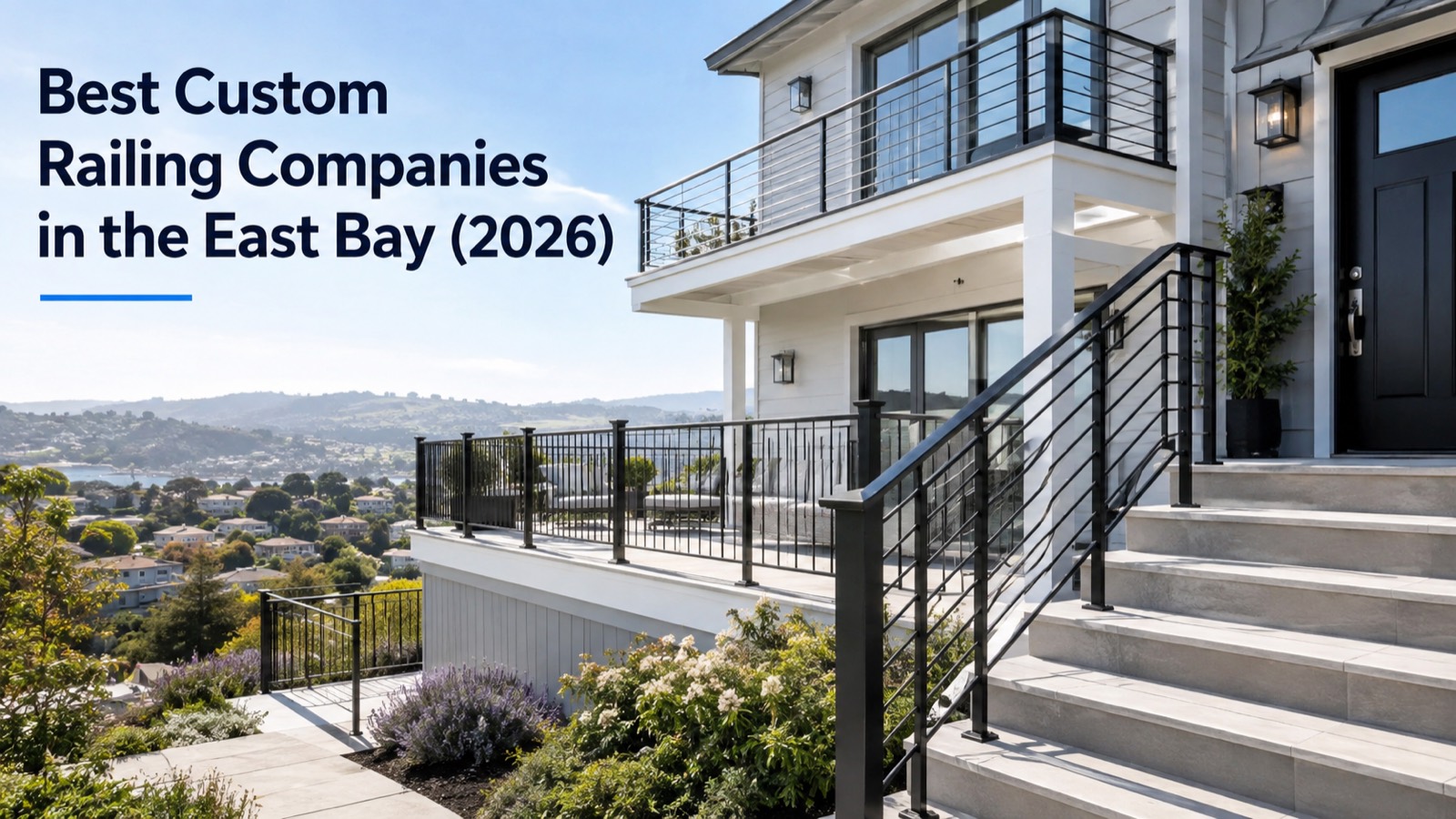
2026 cost ranges by railing type
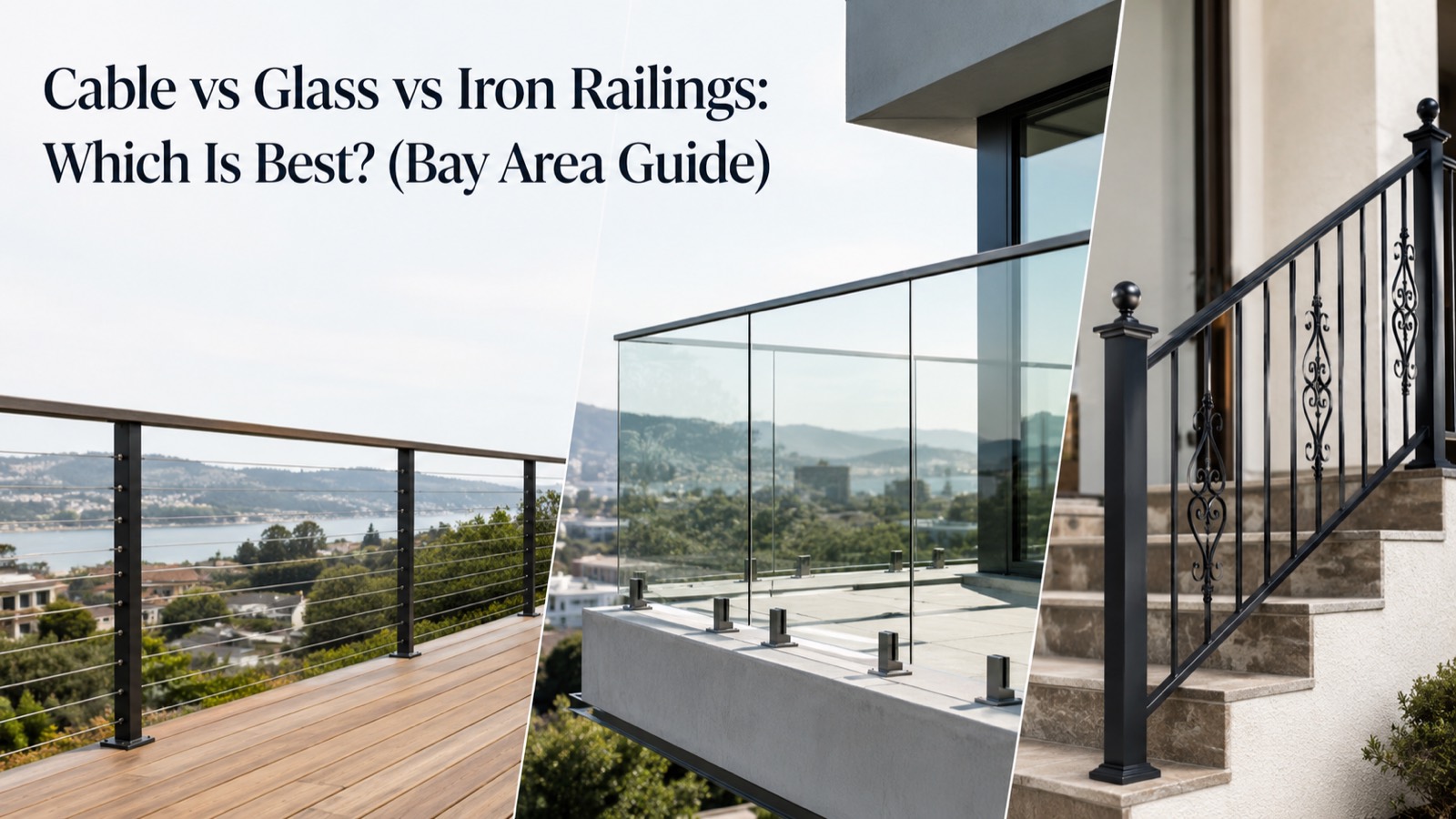
| Railing type | Installed per linear foot | Typical project |
|---|---|---|
| Wrought iron / ornamental | $65–$135 (hand-forged $300–$900) | ~$700–$6,000 |
| Aluminum (powder-coated) | $50–$200 | ~$400–$4,800 |
| Cable railing | $75–$260 | ~$3,750–$13,000 (avg ~$9k/50 ft) |
| Glass railing | $150–$600 | Premium tier |
| Interior stair railing | $40–$100 | ~$900–$2,500 (~25 ft) |
| Exterior deck railing | $20–$600 | ~$400–$4,800 |
| ADA / commercial handrail | $20–$120/ft material + labor | Varies by run |
These are honest ranges, not quotes. Where you fall inside them depends on the factors below.
Planning a concrete project in Alameda or the East Bay? Get a free, no-obligation on-site estimate and a written flat-rate price.
What drives the price up or down
Material and finish. Bare aluminum is cheaper than 316 marine-grade stainless cable; a simple powder coat is cheaper than hand-forged ironwork. Coastal-grade materials cost more up front and save you a replacement later.
Length and layout. Straight runs are efficient. Corners and turns typically add 20–30% because each one means extra posts, cuts, and welds. Stairs cost more than level runs for the same reason — angles, transitions, and code-driven handrail work.
Site conditions. Solid framing and easy access keep labor down. Rotten blocking, difficult anchoring, hillside decks, and tight urban lots push it up.
Complexity. Custom profiles, decorative scrollwork, glass standoffs versus a base shoe, and engineered post spacing all move the number. A cable railing that needs a post every four feet to control deflection uses more material and labor than a simple picket run of the same length; a hand-forged iron rail with scrollwork is priced by the hours at the anvil, not by the foot.
Repair versus new. If you are replacing an existing railing, the condition of what is already there matters. Sound framing and clean anchor points keep a replacement efficient. Hidden wood rot, corroded embeds, or a deck that itself needs structural repair before a new guard can be anchored all add scope — which is another reason an on-site look beats a phone quote.
Why Bay Area and coastal projects skew high
Two forces push East Bay railing prices toward the top of these ranges. First, labor — skilled fabrication and installation cost more here than in most of the country. Second, materials — because the Bay is a marine environment and Alameda sits at sea level on an island, the right corrosion defense is 316 marine-grade stainless, quality powder coat, or hot-dip galvanizing. 316 stainless in particular carries a real premium over bare or mild steel, but on the water it is the difference between a railing that lasts decades and one that streaks rust in a couple of seasons. Spending on the metal that survives salt air is cheaper than repainting or replacing. See our coastal materials guide.
It is worth being blunt about this tradeoff, because it is where homeowners are most often tempted to cut a corner. A bid that comes in far below the ranges above usually gets there one of three ways: thinner or bare material instead of coastal-grade metal, no permit pulled, or a scope that quietly leaves out corners, finishing, or anchoring. Any of those saves money today and costs more within a few years. On an island like Alameda, the cheapest railing is almost always the one you only have to buy once.
Don't forget permits
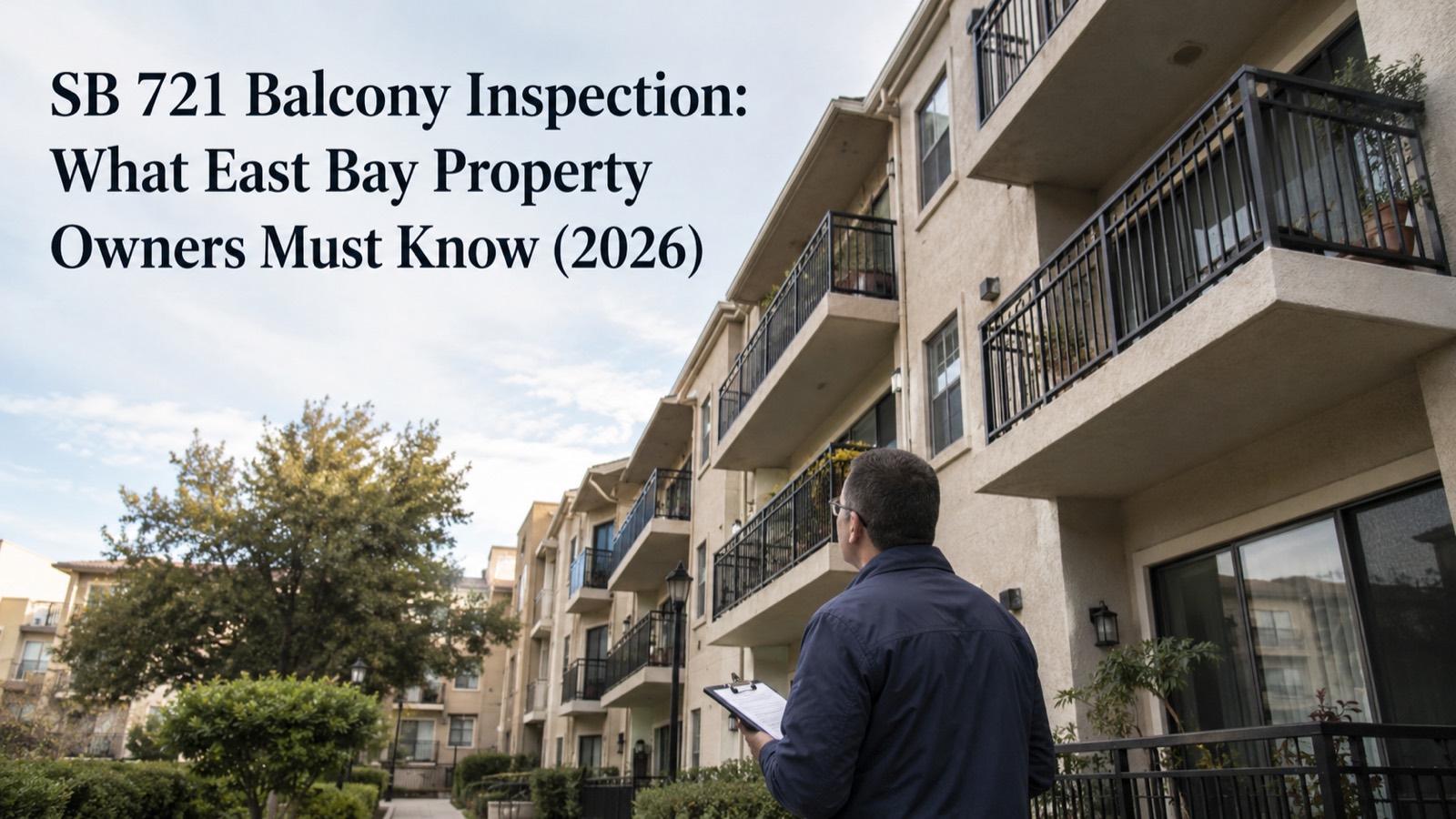
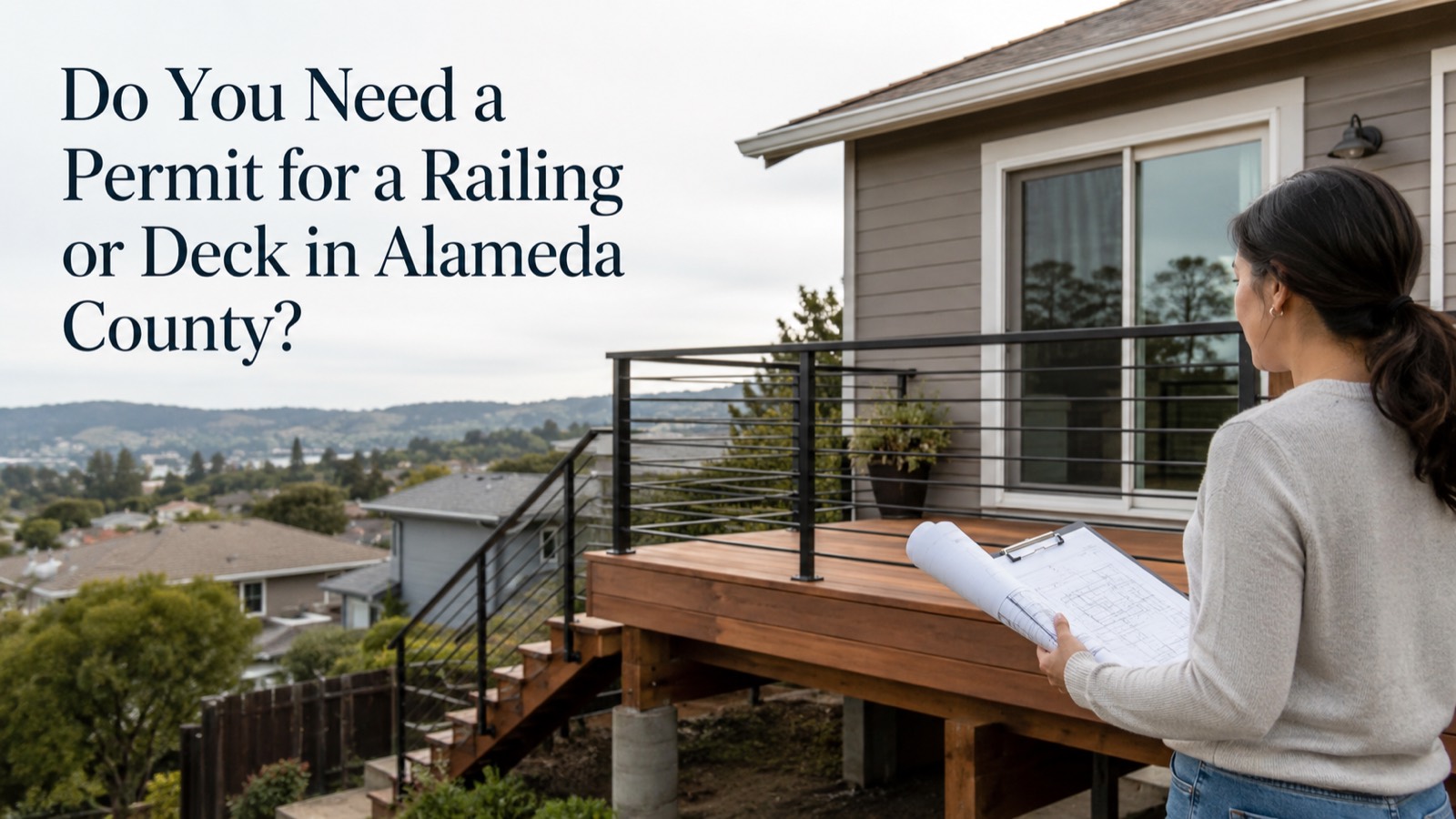
Most guard and deck railing work in Alameda County requires a permit, especially when a walking surface is more than 30 inches above grade. Permit fees commonly run $50–$500 depending on the jurisdiction and scope, and that is separate from fabrication. Building it right and permitted protects your resale and keeps you clear of code enforcement — and for rental buildings, it ties directly into SB 721 balcony compliance. Our permit guide covers who issues them in each city.
A realistic sample budget
Say you want to replace a 30-foot rear deck guard on an Alameda home. A powder-coated aluminum guard might land in the low-to-mid four figures; the same run in 316 stainless cable, with the extra posts cable requires to limit deflection, will run higher — often several thousand dollars once you add corners and a permit. A hand-forged iron front entry rail is priced by the artistry, not just the foot. The only way to know your number is a measured, itemized estimate — which is exactly why ours are free.
One more budgeting tip: think in terms of total cost of ownership, not just the install price. A powder-coated aluminum or 316 stainless system costs more than bare steel today but skips the repaint-and-repair cycle that coastal steel demands, so over ten or fifteen years the “expensive” option is often the cheaper one. When you compare bids, compare what you are actually getting — material grade, finish, post spacing, permit handling, and corners — not just the bottom-line number. Two quotes that look far apart usually differ in scope, and the gap tends to show up later as a change order or an early replacement.
Want a real price for your railing? We measure on-site and quote in writing, at no cost. Call (510) 390-9618.
Pricing a specific project? See cable railing cost in Oakland and wrought iron railing cost in Alameda for hyperlocal numbers.
Questions, Answered
What is the cheapest custom railing option?
Powder-coated aluminum and simple ornamental iron are usually the most budget-friendly, starting around $50–$65 per installed linear foot. The right choice still depends on your exposure to salt air and your code requirements.
Why is cable railing so much more expensive?
Cable railing uses 316 marine-grade stainless hardware and needs posts roughly every 4 feet to limit cable deflection, so material and labor both climb. Typical projects run about $3,750–$13,000, averaging near $9,000 for 50 feet.
Do your estimates cost anything?
No. On-site estimates are free throughout the East Bay. Measuring in person lets us price your exact run instead of guessing. Call (510) 390-9618 to schedule.
Need Help in Alameda?
Alameda Custom Railing provides fast, same-day custom railing across Alameda, CA and the surrounding area — flat-rate pricing, licensed and insured, with 24/7 emergency service. Landed on this article from a search? Head back to our homepage to see everything we do, or reach out now.