
Wrought Iron Railing Cost in Alameda (Interior & Exterior)
The short answer on wrought iron railing cost in Alameda
Most wrought iron railing in Alameda runs roughly $65 to $135 per linear foot installed for clean, well-built work with simple pickets. If you want true hand-forged ornamental detail, the kind that suits a Victorian or Edwardian home, plan on more, often $300 to $900 per linear foot for the forged pieces. A typical interior stair railing project lands around $900 to $2,500 for about 25 feet, and whole projects range from roughly $700 to $6,000 depending on scope. Those are honest planning ranges, not a quote. Your actual number depends on length, ornamentation, site access, and finish, which is why we give free on-site estimates before anyone commits to a dollar figure. Call (510) 390-9618 and we will come measure. If you want the wider material comparison across the East Bay, we break that down in our custom railing cost guide for the Bay Area.
What drives iron railing cost in Alameda
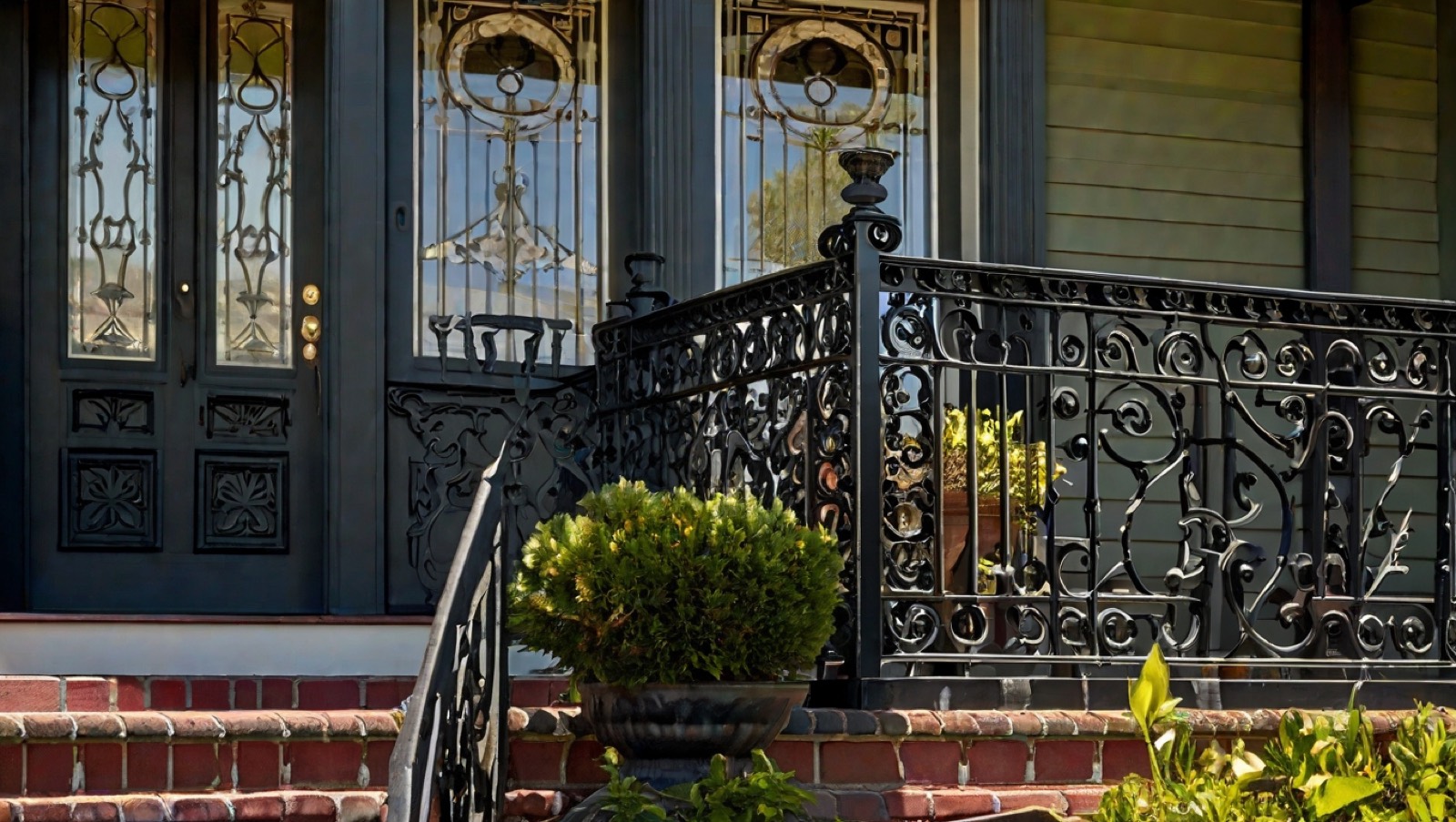
Iron gets priced per linear foot plus setup, finishing, and permits, so two projects of the same length can land in very different places. The biggest swing is ornamentation. A straight run of simple pickets is fast to fabricate, while hand-forged scrollwork, twisted balusters, and period-correct castings take hours of shop time per section and pull the price toward that $300 to $900 range. After that, it comes down to whether the work is interior or exterior, how many corners and stair transitions are involved, and how easy the site is to reach.
Stairs cost more than a flat balcony run for real reasons. Angled drilling into treads, code spacing measured along the slope, and custom shoe fittings all add labor. Corners, gate tie-ins, and wall returns do the same. Length matters too, but not the way people expect: longer straight runs often cost less per foot because setup gets spread across more material. Then there is the old railing. If we are removing and hauling a rusted piece and patching the stucco, concrete, or wood it was anchored into, that patching is part of the job. Finally, finish is a real line item in Alameda, and we cover why below. Permits add somewhere in the range of $50 to $500 when they apply. For the full picture on your specific run, a wrought iron railing estimate is the honest way to price it.
Planning a concrete project in Alameda or the East Bay? Get a free, no-obligation on-site estimate and a written flat-rate price.
Wrought iron railing cost by type and finish
Here are real 2026 planning ranges for Alameda so you can budget before we come out to measure. East Bay labor and coastal-grade finishing skew these a little higher than inland numbers, and hand-forged ornamental work sits in its own tier.
| Type or finish | Installed per linear foot | Typical project |
|---|---|---|
| Simple pickets, powder coat | $65–$135 | ~$700–$4,000 |
| Hand-forged ornamental detail | $300–$900 | Premium tier |
| Interior stair railing (~25 ft) | $65–$135 | ~$900–$2,500 |
| Exterior iron, galvanized + powder coat | $80–$150 | ~$1,000–$6,000 |
| Victorian / Edwardian restoration | Varies by section | Quoted on site |
Read these as starting points, not a bid. The moment your job has a couple of stairs, a corner, and coastal finishing, the honest answer becomes "let us measure." That is what a free on-site estimate is for: (510) 390-9618.
Interior stair railings vs exterior iron
Interior stair railings are one of the most common iron jobs we do in Alameda, and for good reason. In a remodel or restoration, a well-made iron rail is the piece everyone touches and sees every day. Interior work skips the heavy corrosion protection, so the finish cost is lower, but the fabrication is precise: a graspable handrail set 34 to 38 inches off the stair nosing, balusters spaced so a 4-inch sphere cannot pass, and guards at 42 inches where the code calls for them. That precision, plus angled drilling into treads, is why a stair run costs more per foot than a plain flat rail even though it uses less material.
Exterior iron is a different animal in Alameda. It lives in salt air, so it needs a proper corrosion system, which adds cost but pays for itself in years of service. Exterior runs also tend to be longer, wrap around decks and porches, and tie into gates. If you are pricing an interior remodel and an exterior deck at the same time, they will not cost the same per foot, and that is expected. Our stair railing page walks through the interior side in more detail.
The salt-air finish premium in Alameda
Alameda is an island at sea level, which means your railing sees about the most aggressive marine corrosion in the East Bay. Ordinary paint on bare steel does not survive that for long. The finish that holds up here is hot-dip galvanizing under a powder coat: the galvanizing gives the steel a sacrificial zinc layer, and the powder coat seals it and gives you the color. It is more work than a quick coat of primer and paint, and yes, it pushes the price up a bit. It is also the single best money you can spend on an exterior iron railing in this city, because it is the difference between a rail that looks good for a decade and one that streaks rust in a couple of winters.
We build in mild and carbon steel and hand-forged iron, and for coastal exterior work we default to that galvanize-plus-powder-coat system rather than paint. If you want the deeper material comparison for salt-air exposure, we wrote a whole guide on the cost trade-offs across materials. The short version for iron in Alameda: budget for the real finish, not the cheap one.
Historic homes, Victorian restoration, and code 8-504
Alameda has one of the richest stocks of Victorian and Edwardian homes anywhere in the Bay Area, and period-appropriate ornamental iron is a big part of keeping them right. Restoring an original railing, or fabricating a new one that matches the era, is skilled forge work, which is why restoration lands in that higher hand-forged tier rather than the simple-picket range. The payoff is a railing that belongs on the house instead of fighting it.
There is also a code angle worth knowing. The California Historical Building Code, section 8-504, can allow period-correct restoration on qualifying historic homes where a strict reading of the modern code might otherwise force changes that hurt the historic character. It is not an automatic exemption, and it applies to qualifying properties, but it is the pathway that makes faithful restoration possible. If your home may qualify, tell us up front so we design and document the work with that in mind. We are happy to talk through what is realistic for your specific house. Start with a look at our wrought iron railing work, then call (510) 390-9618.
Permits in Alameda
Whether your railing needs a permit depends on what you are doing. Straightforward like-for-like replacement often does not, while new guards, structural changes, and anything touching a stairway or an exterior deck frequently does. When a permit applies in Alameda, it goes through the city's own Permit Center using the Accela online portal, and the fee generally lands somewhere in the $50 to $500 range depending on scope. We handle permitted iron work regularly and can guide you through what your specific project needs. For the county-wide picture on permitting and inspection, our team can point you to the right desk so nothing stalls your install.
Questions, Answered
How much does wrought iron railing cost per foot in Alameda?
Figure roughly $65 to $135 per linear foot installed for clean work with simple pickets, and $300 to $900 per linear foot for true hand-forged ornamental detail. Exterior runs that need galvanizing plus powder coat for salt air sit a little higher than interior work. These are planning ranges, not a quote. For a firm number we give a free on-site estimate: (510) 390-9618.
Is wrought iron more expensive than aluminum or cable railing?
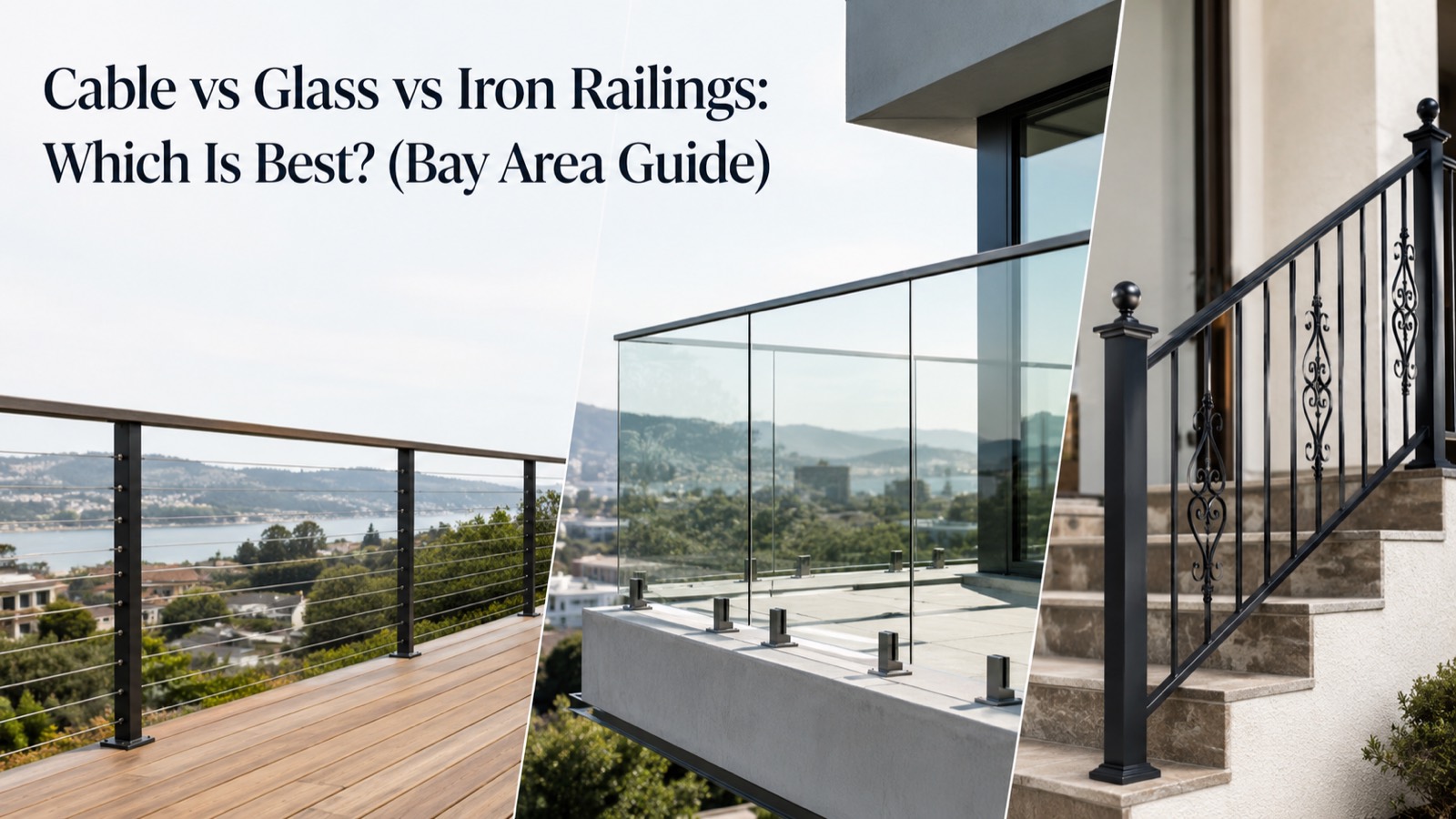
It depends on the design. Simple iron and powder-coated aluminum overlap in price, roughly in the same per-foot band, so iron is not automatically more expensive. Hand-forged ornamental iron costs more than either because of the forge labor. Cable railing tends to run higher on long runs once you count the hardware and tensioning. The right pick is about look, maintenance, and where the railing lives. Our Bay Area cost guide compares all of them side by side.
What makes an interior stair railing cost more than a flat rail?
Labor. A stair rail needs a graspable handrail set 34 to 38 inches off the nosing, balusters spaced under the 4-inch sphere rule measured along the slope, and angled drilling into the treads. That precision takes shop and install time even though the run uses less material than a long flat balcony rail, so the per-foot price is higher. See our stair railing page for details.
Why does exterior iron cost more to finish in Alameda?
Because Alameda is an island at sea level with heavy salt-air corrosion. Bare steel with paint does not last here. The finish that holds up is hot-dip galvanizing under a powder coat, which is more work than a simple painted finish and adds cost. It is worth it: it is the difference between a railing that looks good for years and one that streaks rust after a couple of winters. We default to that system on coastal exterior iron.
Can you restore original wrought iron on a Victorian home?
Yes. Alameda is full of Victorian and Edwardian homes, and period-correct iron restoration is a core part of what we do. It is skilled forge work, so it prices in the higher hand-forged tier, but it keeps the railing true to the house. On qualifying historic homes, California Historical Building Code section 8-504 can support period-correct restoration. Tell us up front if your home may qualify and call (510) 390-9618.
Need Help in Alameda?
Alameda Custom Railing provides fast, same-day custom railing across Alameda, CA and the surrounding area — flat-rate pricing, licensed and insured, with 24/7 emergency service. Landed on this article from a search? Head back to our homepage to see everything we do, or reach out now.